The Bloody Spur is hardboiled noir, and pulpish, yet it is not quite pulp. It is a smart, artfully crafted book that contains salacious and sordid aspects of pulp which make it something of a curio….
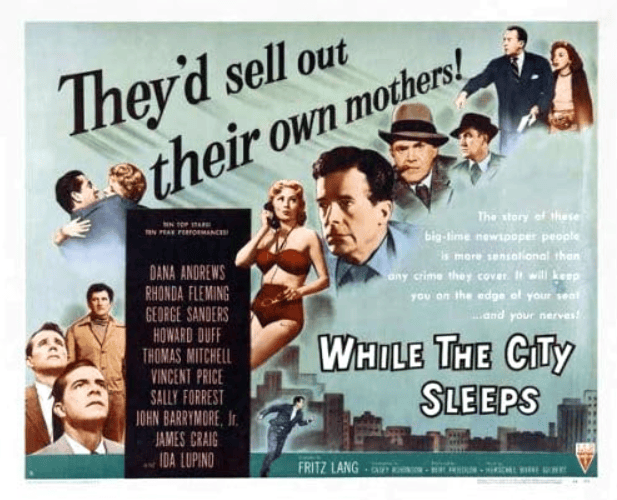
Charles Einstein’s 1953 novel The Bloody Spur has several interesting aspects about it. The novel is based on the notorious true 1940s Lipstick Killer case wherein a murderer left a macabre message in lipstick at the scene of one his crimes pleading with authorities to “stop him.” Secondly, the novel takes a satirical look into the lurid, sensationalistic, and often exploitative aspects of news reporting at the time in which the novel was released. Finally, there is the gem of a classic film noir that was made from this book While the City Sleeps (1956) directed by Fritz Lang and starring Dana Andrews and Ida Lupino. All of these various items make reading this book a worthwhile endeavor. Stark House Press’s reissue of The Bloody Spur with an introduction by crime fiction scholar, Curtis Evans, allows readers to rediscover this overlooked work.
The Bloody Spur is hardboiled noir, and pulpish, yet it is not quite pulp. It is a smart, artfully crafted book that contains salacious and sordid aspects of pulp which make it something of a curio. Einstein’s background as a news reporter and sportswriter makes itself evident throughout the text, and the dialogue is sharp and in-line with the best of the noirs. From the news and media perspective, one may also be reminded of the work of Ernest Lehman, especially The Sweet Smell of Success, another misanthropic tale of humanity and newspapers, and example of the cut-throat and exploitative nature of news and media of the 1950s minus the murder. These themes are still relevant today but have now been amplified by social media and AI. Add the serial murderer on the loose, and you have a wild concoction of satire, psychosocial misanthropy, and unabashedly acerbic and acidic wit.
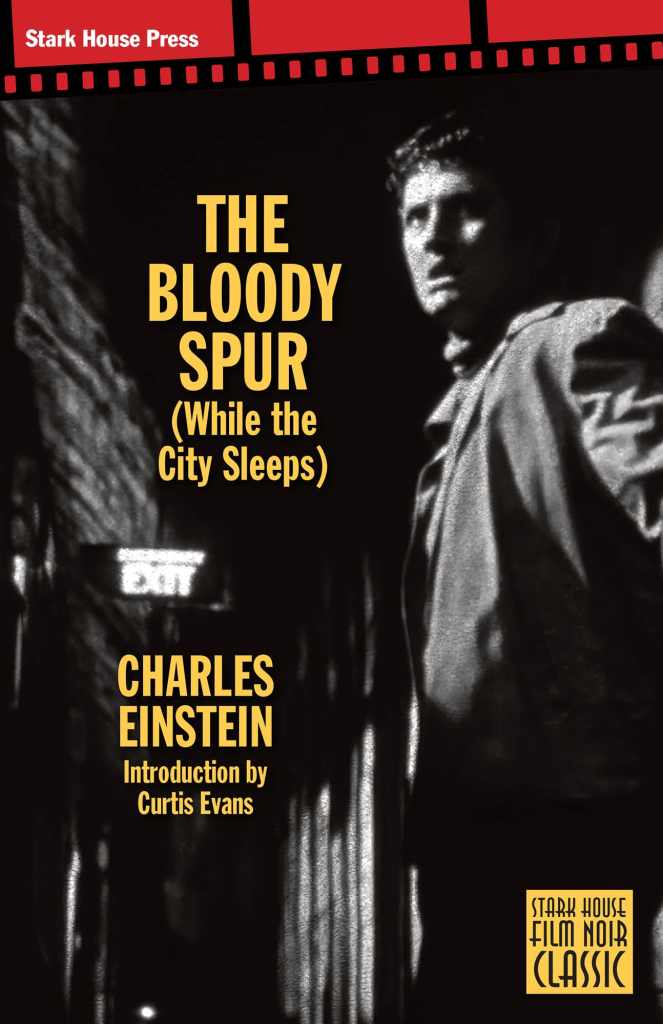
There are parallel narratives in play in the The Bloody Spur. One is of the rivalries of four newspaper men to chase down the “scoop,” and the other is of the sex-crazed killer, Robert Manners. Cyrus McCrady, executive director of the Kyne News Service, is dead, and four reporters vie for the coveted position. The murders provide an opportunity for the reporters to acquire a story that would enhance their careers.
This novel is more openly frank than any other type of hardboiled pulp that might be encountered from this era in dealing with the various sexual agendas of its characters including the bizarre behavior of the killer. It is hard to tell whether it was Einstein’s intention to satirize the media or exploit the sex and violence of the story that propels the narrative. Perhaps it is a mixture of both. However, Einstein’s skill is apparent as he juggles multiple characters, narratives, and “noir-speak.”
The media can serve justice and sometimes it can perpetuate brutal degradation and exploitation. As much as The Bloody Spur is a hardboiled noir, it is also a skewering of American journalism or crime reporting in the 1950s. L.A. Confidential author James Ellroy fans may enjoy this novel and may even see an influence on his works as well as other writers who mix crime and journalism together in their narratives. The ominous message in the Lipstick Murderer case also calls to mind the similar modus operandi present in other infamous murder cases involving the media including the Manson Murders’ “helter skelter,” the Zodiac murders, with letters sent to California newspapers, and the Son of Sam killings wherein David Berkowitz sent disturbing letters to Daily News columnist Jimmy Breslin.
Einstein probes the psychology of the psychopathic killer in more detail than I’ve seen in other hardboiled novels of that era, except maybe a little later in Jim Thompson. This aspect makes the novel feel more contemporary than it is and foreshadows the endless modern wave of serial killer narratives. The reader is provided with the inner monologue and misdeeds of a psychopath which may make the novel more disturbing than others of the same genre.
Einstein demonstrates the monomaniacal and cold calculating mind of Manners in the following passage.
He had killed, and he was free. What could he not do now? He would wait. He would ride the subways to far parts of the city and walk streets and as he had never planned before.
There is a pervasive cynicism that emanates from the prose that makes it humorously toxic at times, without sacrificing the atmosphere of dread that is also ever present. As each page is turned, the reader is subjected to the chicaneries acted out by these grotesque players to outwit one another, as well as an escalation in criminality.
Evans’ introduction provides a strong context for the novel describing the real-life murder case that the book is based on. He details the indictment and conviction of William George Heirens, whose confession may have been coerced. Evans explains that Heirens’ case seems to reek of a whole range of police procedural abuses, further adding to the mystique of the murder case that surrounds Einstein’s book.
Fritz Lang’s film noir, While the City Sleeps, is tamer than the book and an often-overlooked semi-cult film that is worth revisiting. Evans, in his introduction, suggests reading the book before seeing the film. It seems that the book is more mean-spirited and shocking, though still tame by today’s standards. Murder is the order for the day in this book, and the four newsmen salivate over getting the perfect scoop. Hard as nails, sordid as hell, and subversively and scathingly humorous, The Bloody Spur is an important contribution to crime fiction, hardboiled noir, and satirical social commentary.
William Blick is a literary/crime fiction and film critic, a librarian, and an academic scholar. He is contributing editor to Retreats from Oblivion: The Journal of Noircon and has published work in Senses of Cinema, Film Threat, Cinema Retro, Cineaction, and Film International Online, where he frequently contributes. He is also an Associate Professor/Librarian for Queensborough Community College of CUNY.

