A pioneering influence on genre novels with literary and philosophical aspirations….
Horace McCoy is most well-known for a brutally frank depiction of humanity’s dark side in his most famous work, They Shoot Horses, Don’t They (1935). He strikes again this time skewering 1930s Hollywood in the salacious, yet paradoxically poetic hardboiled novel; I Should’ve Stayed Home (1938). The novel has been reissued in the Black Gat Series by Stark House Press. Like his other work, The Bloody Spur, McCoy’s novel is sexy and lurid. Also, it spares no one in this grueling portrayal of the “little” people that got trampled as others achieved the walk of fame status in early Hollywood. The comparison to The Day of the Locust by Nathael West is glaring. Yet, McCoy utilizes his pulp roots to spice it up a notch. McCoy made a living writing for Black Mask, an early pulp that was co-founded by journalist/ essayist H.L. Mencken before earning a living as a journalist, novelist and screenwriter. His experience writing pulp and journalism can be seen in flashes in the writing style of Home.
What is it about the history of Hollywood that audiences find so captivating? McCoy’s writings in the 1930s were all too relevant and still prove timely. The studio system had many people disillusioned, and the public shifted to a jaundiced view of the sparkling, gilded Hollywood image. As many found out, there was a sordid underbelly at the foundation of Hollywood as an institution. In exposing the venality and greed of the “showbiz machine” and filling the pages with both treacherous and naive characters who inhabit the dark side of aspiring stardom, McCoy taps into essential elements of American popular culture and cultural criticism-and he does so in the package of a pulpy-hardboiled novel achieving an almost existential aspiration like so many great hardboiled novels and film noirs have done.
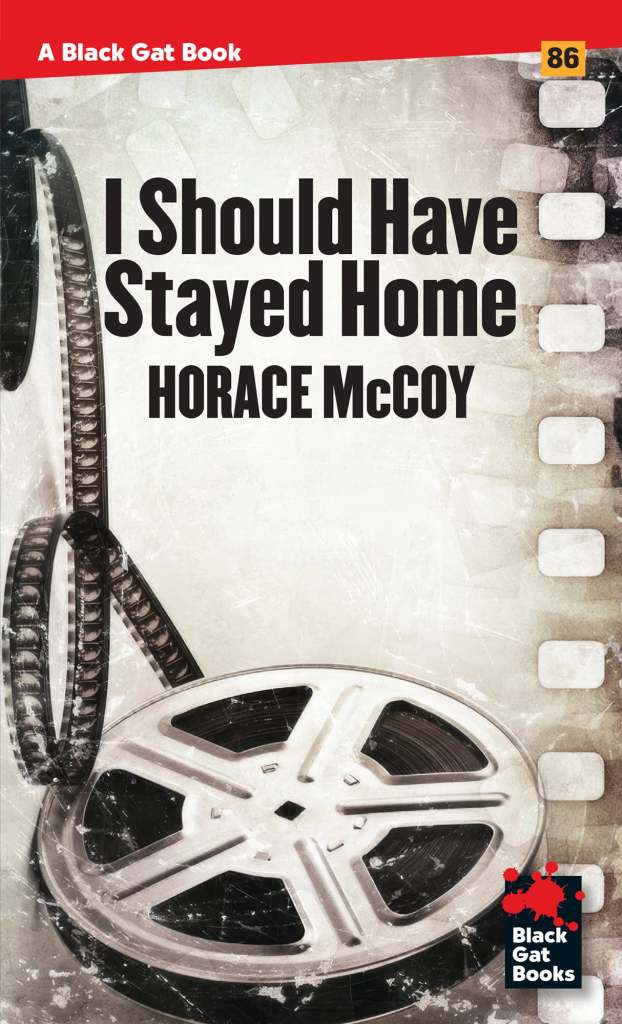
I Should’ve Stayed Home is the story of country bumpkin, Ralph Carston, a Georgia native who arrives in Hollywood to make a name for himself only to find himself in the arms of a manipulative widow, Mrs. Smithers, as “plaything” and is then caught up in the clutches of upper-crust Hollywood society. His cohort and friend, Mona Matthews, following her own dreams of stardom, finds desperation and indignation as well.
As one might have guessed. McCoy is downbeat and misanthropic, and indeed Tinseltown is exposed for its exploitative aspects and decadent, sordid excesses. McCoy is a master of hardboiled tropes, but like so many other writers of pulp, in I Should’ve Stayed Home, the sum of the parts adds up to something larger. There is a desperation that is conveyed in the novel, which makes it more than just a salacious tale. It asks the reader to contemplate Hollywood’s very raison d’être. Furthermore, it questions the very moral fabric of Ralph, Mona, and Mrs. Smithers and many people like them.
The novel is told in the first person by Ralph, which gives it an even more personal noirish tone, recalling Jim Thompson, or the film, Sunset Boulevard. In the very first chapter, Ralph exclaims:
I did not want to get out on the streets and see what the sun had to show me, a cheap town filled with cheap stores and cheap people, like the town I had left, identically like any one of the ten thousand small towns in the country. Not my Hollywood, not the Hollywood you read about. This is what I was afraid of now, I did not want to take a chance on seeing that might have me wish I had stayed home, and this why I am waiting in darkness for the nighttime.
Ralph’s narration of the events resonates as a sort of sad loser’s poetry akin to David Goodis’s protagonists and explores an innovative semi-stream-of-consciousness style of writing. Early in the novel, the sad situation that Ralph finds himself in and is told in flashback
I Should’ve Stayed Home is not particularly violent for a hardboiled novel. Most of the violence is verbal and emotional. Although the novel moves briskly and has well defined characters, one major flaw is its maudlin tone. At times, the sappy Ralph and desperate Mona are difficult to tolerate in the choices they make. The novel is a tale of poor choices. Yet, McCoy doesn’t seem to want to blame the characters. It is almost as if they lack free will and are caught up in whirl wind of corruption that they can’t break out of.
All in all, Horace McCoy is definitely an underrated literary force from the 1930s, and for the most part, seems to be overlooked. While They Shoot Horses and the film it spawned are McCoy’s legacy, I Should’ve Stayed Home is also a gem that is not very well remembered and deserves to get more attention paid to it, not only as an influential hardboiled novel, but of a pioneering influence on genre novels with literary and philosophical aspirations.
William Blick is a literary/crime fiction and film critic, a librarian, and an academic scholar. He is contributing editor to Retreats from Oblivion: The Journal of Noircon and has published work in Senses of Cinema, Film Threat, Cinema Retro, Cineaction, and Film International Online, where he frequently contributes. He is also an Associate Professor/Librarian for Queensborough Community College of CUNY.

