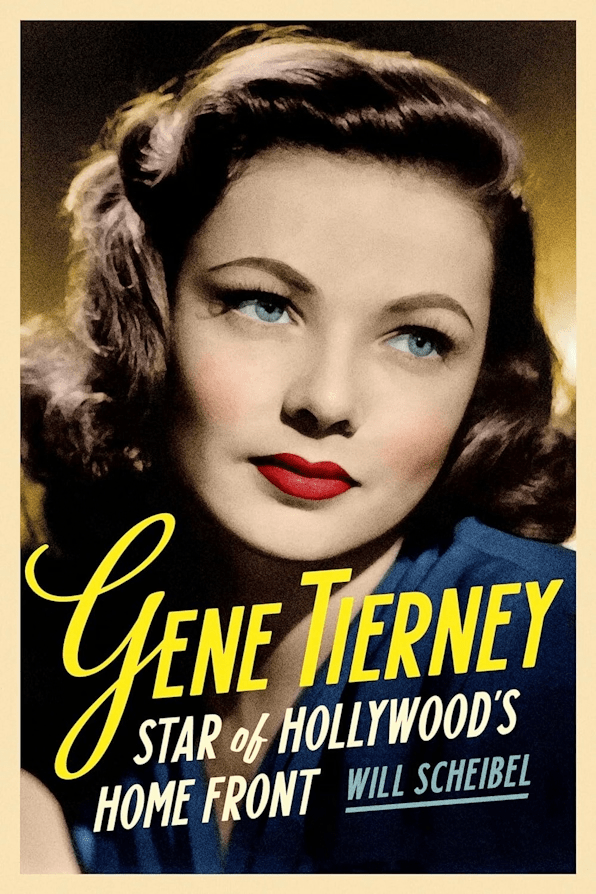
Not a biography but a thorough analysis of the evolution of an influential and enigmatic figure of film history and noir cinema….
Gene Tierney was one of the most unforgettable faces of studio system era Hollywood. She was named “the most beautiful woman in film history,” by 20th Century Fox cofounder and studio mogul, Daryl Zanuck. In Will Scheibel’s book, Gene Tierney: Star of Hollywood’s Home Front, the author explores the life and career of the starlet who was perhaps most well-known for her performance in the quintessential film noir, Laura (1944, Otto Preminger).
Scheibel’s book unearths an enigmatic relationship which Tierney had with Hollywood and the public. Known for bringing an air of “ordinariness” to the screen as well for her beauty, she also was ultimately one of the first actors to endure the hardships of mental illness under the scrutiny of the public eye.
A wartime home front entertainer and a pin-up girl, Scheibel notes that on many levels Tierney was not taken seriously as an actor initially. The book mentions Bosley Crowther, the persnickety New York Times critic of the 1940s, who said that Tierney was a pretty girl, but who had no depth of feeling as an actress, and in scathing reviews of such performances in The Ghost and Mrs. Muir (1947 Mankiewicz) and Dragonwyck (1946 Mankiewicz), described her acting style as “customarily inexpressive.”
Scheibel references Amanda Kronkle who in writing about Hollywood sex symbols, particularly Marilyn Monroe, suggests that actors of this type were especially complex because, “at the same time as they acknowledged and resisted the conventions of the sexpot, they also mirrored, or reflected, the concerns and anxieties of many postwar Americans.” Tierney like Monroe, was known as a pretty face, but as Scheibel intimates, she was more than just “the girl in the portrait.” In 1945, her talent was fully recognized when she was nominated for an Oscar in John Stahl’s Leave Her to Heaven (see below).
Scheibel’s book is an engrossing read, starting with Tierney’s wartime efforts and tracing her successes and challenges as she alternated between fame and illness. The book addresses Tierney’s personal struggles including raising a child with a disability and how she coped with mental illness in the face of glaring negative press. Although she suffered tremendously, Tierney continued to work, much to her credit.
Gene Tierney’s contribution to noir is undeniable. In films such as Jules Dassin’s Night in the City (1950), Otto Preminger’s Whirlpool (1950) and finally the most notable, Laura, Tierney lent her beauty and depth to these roles which weaved a rich tapestry of noir expression in an era wherein modes of expression for women actors were limited.
Scheibel’s book is a reminder that beauty can be skin deep in the film industry, and while Tierney beauty was unmistakable, she possessed a vulnerability and iconoclastic “extraordinariness” and lent it to the “ordinariness” of any role she played. As the author notes, at the end of the 1940s, Tierney was in at least one film of every genre of the time, and he states that her “legacy persists in media and popular culture both through visual citation and most general examples of intertextuality.” This is followed up by noting allusions to Tierney in works as varied as Robert Altman’s The Player and David Lynch’s Twin Peaks.
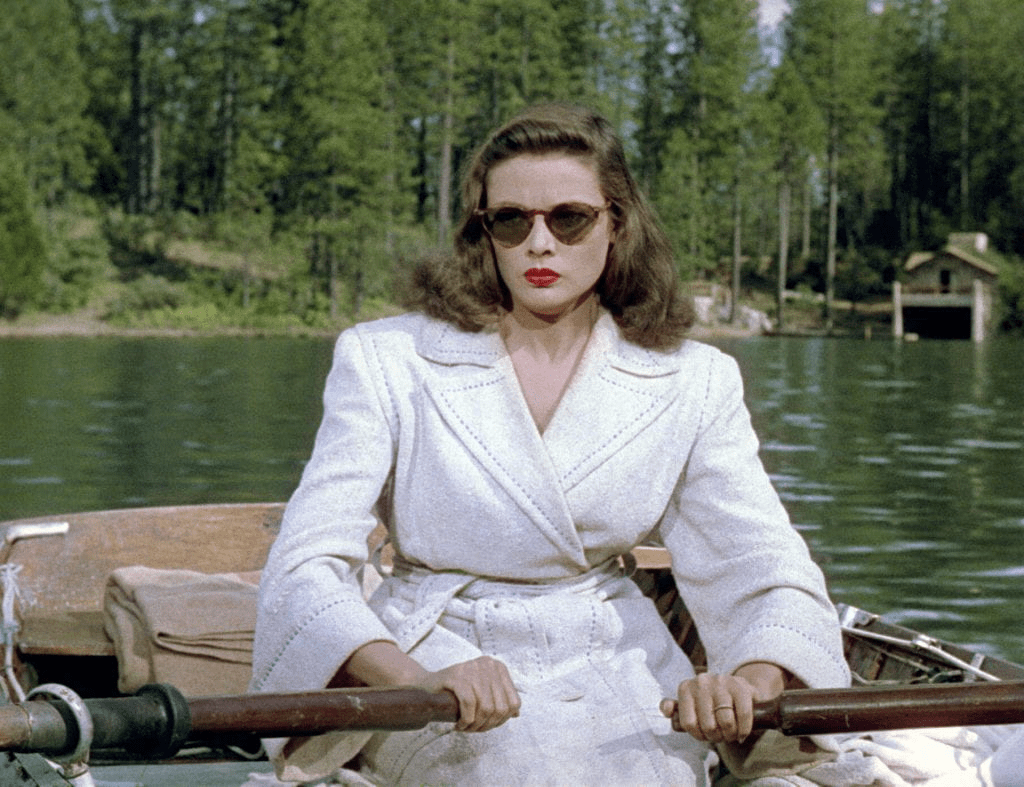
Tierney worked alongside some of the greatest talent in the industry including actors and directors: Dana Andrews, Otto Preminger, Herman Mankiewicz, and numerous others, and an although she demonstrated talent for any genre, it is in film noir that she arguably made her most significant impact. Scheibel discusses the conflicted versions of the script and its early stage and culmination of elements to create the nuanced character of Laura, in a film that is now considered one of the greatest noirs of all time.
Scheibel’s book is not a biography. It is a thorough analysis of the evolution of an influential and enigmatic figure of film history. Always thorough and painstaking in provision of details, the book prompted this reader to take a second look at World War II era filmmaking and the studio system Hollywood from a new perspective. Additionally, the author examines the production history of every major film of Tierney’s career, and the critical reception of these films to examine the impact which the actor had, which was significant.
Star of Hollywood’s Home Front is articulate and unbiased to Scheibel’s credit. The author states early on that:
“This book does not presume to recover and speak for the ‘real’ Tierney, nor does it speculate about her thoughts and feelings, which one cannot ever ‘really know, but it does seek to restore some of her historical subjectivity that her monolithic reputation obscures.”
Indeed, Scheibel has allowed this reader to take a step back from that monolithic reputation and look beneath the facade of the Hollywood “dream factory” embellishments to see the flesh and blood that is captured on the celluloid film.
William Blick is a literary/crime fiction and film critic, a librarian, and an academic scholar. He is contributing editor to Retreats from Oblivion: The Journal of Noircon and has published work in Senses of Cinema, Film Threat, Cinema Retro, Cineaction, and Film International Online, where he frequently contributes. He is also an Associate Professor/Librarian for Queensborough Community College of CUNY.

